Main line clog on a holiday
With a full house of guests, the basement floor drain starts backing up, and by the time the plumber clears the line, sewage has soaked the basement carpet.
Sewage is contaminated (Category 3) water. Keep children and animals away from the affected area.
A Thornton guide to sewage backups
Sewage is contaminated water. It needs protective equipment, removal of porous materials it touched, and thorough sanitizing, not a mop and a fan.
Sewage work involves contaminated water; ask any cleanup company what protective equipment and training its crew has.
Turn off power to the area only from a dry location. If anyone feels ill after contact, call a doctor.
Water from a sewer backup, overflowing toilet with waste, or floor drain is classified in the restoration industry as Category 3, the most contaminated class. It can carry bacteria, viruses, and other pathogens. Porous materials it soaks into, like carpet, pad, drywall, insulation, and upholstered furniture, generally can't be made safe and must be removed.
Professional sewage cleanup uses protective equipment, contains the affected area, extracts contaminated water, removes affected porous materials, cleans and sanitizes hard surfaces, and dries the structure before rebuilding. Ask whether one company will handle the entire sequence or hand parts of it off.
Porous materials it soaks into, like carpet, pad, drywall, insulation, and upholstered furniture, generally can't be made safe and must be removed.
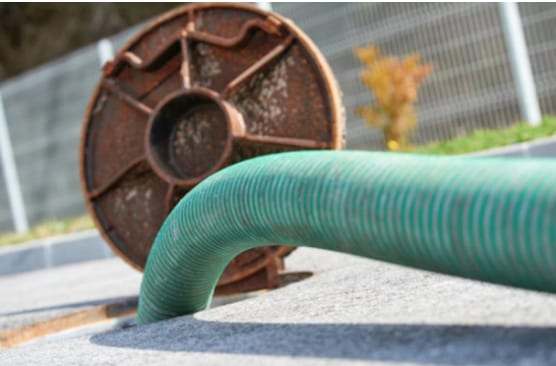
Restorers classify water by contamination, following the industry standard for water damage (IICRC S500). The category decides what can be dried and saved and what must be removed.
Category 1: clean water
From a supply line, faucet or appliance inlet. Not contaminated at the source, but it degrades the longer it sits.
Category 2: grey water
Dishwasher or washing machine drain water, or a toilet bowl overflow without solid waste. Contains contaminants that can cause illness.
Category 3: black water
Sewage, a toilet overflow with feces, or a main sewer line backup. Grossly contaminated. Everything it touched is handled as contaminated.
Clean water that sits for a day or two can become Category 2 or 3 as bacteria grow. That is one reason a slow response turns a small job into a large one.
Thornton, one of the larger cities in the north metro area, is mostly in Adams County and has grown steadily since the 1950s, with neighborhoods ranging from older homes near Washington Street to newer subdivisions to the north and east. Many homes have basements with floor drains, the most common entry point for sewer backups.
In most Front Range cities, the homeowner is responsible for the sewer service line from the house to the city main, while the city maintains the main itself. If several neighbors have backups at once, contact the City of Thornton's utilities department; if only your home is affected, the problem is more likely in your own line.
ZIP codes served: 80260 (Denver), 80229 (Denver), 80233 (Denver), 80241 (Thornton), 80602 (Brighton).
Also nearby: 80031, 80234, 80030, 80221, 80003, 80640, 80216, 80020, 80021, 80266, 80211, 80023, 80212, 80205, 80005.
Do
Don't
Each step is designed to remove contamination, not just water.
| Step | What happens | What to ask for |
|---|---|---|
| 1. Protect and contain | Set up protective equipment and containment so contamination isn't tracked into clean areas. | What protective equipment is used, and how clean rooms are kept separate. |
| 2. Extract | Remove contaminated water and solids from the affected area. | How the water and solids are disposed of. |
| 3. Remove porous materials | Remove and dispose of affected carpet, pad, drywall, insulation, and other porous items. | A list or photos of everything removed, for the insurance claim. |
| 4. Clean and sanitize | Clean hard surfaces and apply an appropriate antimicrobial treatment. | Which product is applied, and to which surfaces. |
| 5. Dry and rebuild | Dry the structure fully, verify readings, and complete repairs. | Moisture readings before walls close, and whether rebuilding is a separate estimate. |
Before removal starts, the affected area is closed off with plastic sheeting and, where needed, negative air pressure. That way dust and droplets don't reach clean rooms. Crews should wear protective equipment; ask what training they have for contaminated-water work.
| Material | Usual outcome | Why |
|---|---|---|
| Carpet and carpet pad | Removed and disposed of | Pad and fibers absorb sewage and can't be reliably sanitized. |
| Drywall and insulation below the wet line | Cut out and disposed of | Porous; contamination wicks into the wall cavity. |
| Upholstered furniture, mattresses | Usually disposed of | Deep contamination; documented for the insurance claim first. |
| Concrete, tile, sealed hard flooring | Cleaned and disinfected | Non-porous surfaces can be cleaned and sanitized. |
| Framing and studs | Cleaned, disinfected and dried | Kept unless decayed; moisture-checked before closing walls. |
| Hard-surface belongings | Cleaned and disinfected or discarded | Depends on the material and owner's choice. |
Every loss needs an on-site assessment; this table describes typical outcomes, not a promise for any specific material.
With a full house of guests, the basement floor drain starts backing up, and by the time the plumber clears the line, sewage has soaked the basement carpet.
A homeowner gets repeated minor backups until a large one floods the basement bathroom and laundry area.
A clogged toilet overflows upstairs, sending contaminated water through the floor into the kitchen ceiling below.
Guides and tools on water categories, removal decisions and claims.
These articles each take one question a Thornton household runs into after sewage comes up a drain, from who owns the pipe under the front lawn to what happens to a furnace that sat in contaminated water.
Practical tools you can print or keep open on a phone while the basement is still a mess: a claim documentation worksheet, questions for an insurance agent and a cleanup contractor, a guide to who to call first, a plain-language glossary, and a seasonal calendar for keeping the sewer lateral flowing..
Each of these typical cases is an illustrative example, not a real household or a real job.
The north metro is not one housing market.
A very small backup confined to a hard, nonporous floor can sometimes be cleaned by a homeowner with gloves, eye protection, and disinfectant. Backups that reach carpet, drywall, or large areas should be handled professionally because of the health risks and the materials that need removal.
No. Industry guidance calls for removing and discarding carpet and pad contaminated by sewage.
Many standard policies exclude sewer and drain backup unless you've added a specific endorsement. Check your policy and talk with your agent.
In most Colorado cities, homeowners are responsible for the service line from the house to the public main. Your city's utilities department can tell you where responsibility changes.
After extraction, removal, sanitizing, and drying, which often takes several days, rebuilding can start. The total time depends on the size of the area and the repairs needed.
A backwater valve is a device installed in the sewer line that lets wastewater leave the house but closes if sewage tries to flow back in. A licensed plumber can tell you whether one makes sense for your home.
A very small spill on sealed tile may be manageable with gloves, eye protection and a disinfectant. Once sewage reaches carpet, drywall, a finished basement or anything you can't throw away, professional cleanup is safer. The contamination goes deeper than it looks, and a household vacuum or fan spreads it.
This form is not connected. This website is a draft preview: no business has been confirmed to receive requests, so the fields below are switched off and nothing can be sent. In an emergency, call 911.