A sorting routine that protects the claim
Do this with gloves, eye protection and a mask, or let the cleanup contractor handle contents if anyone in the house is in a high-risk group.
- Photograph before moving.Shoot each area wide, then close up on labels, brand names and the water line on boxes. Insurers want to see what was there and how it was affected.
- Separate by contact.Items that sat in sewage go in one zone; items that were only in the room but stayed dry go in another. Dry items may only need surface cleaning.
- List what you discard.Write a running list with description, rough age and quantity. Keep a few samples of carpet or fabric if the insurer asks.
- Move cleanable items out.Hard goods go to a garage or driveway area for washing, away from clean living space.
- Decide on irreplaceable items quickly.Photos and documents degrade fast once wet. If you want to try to save them, act within a day or two.
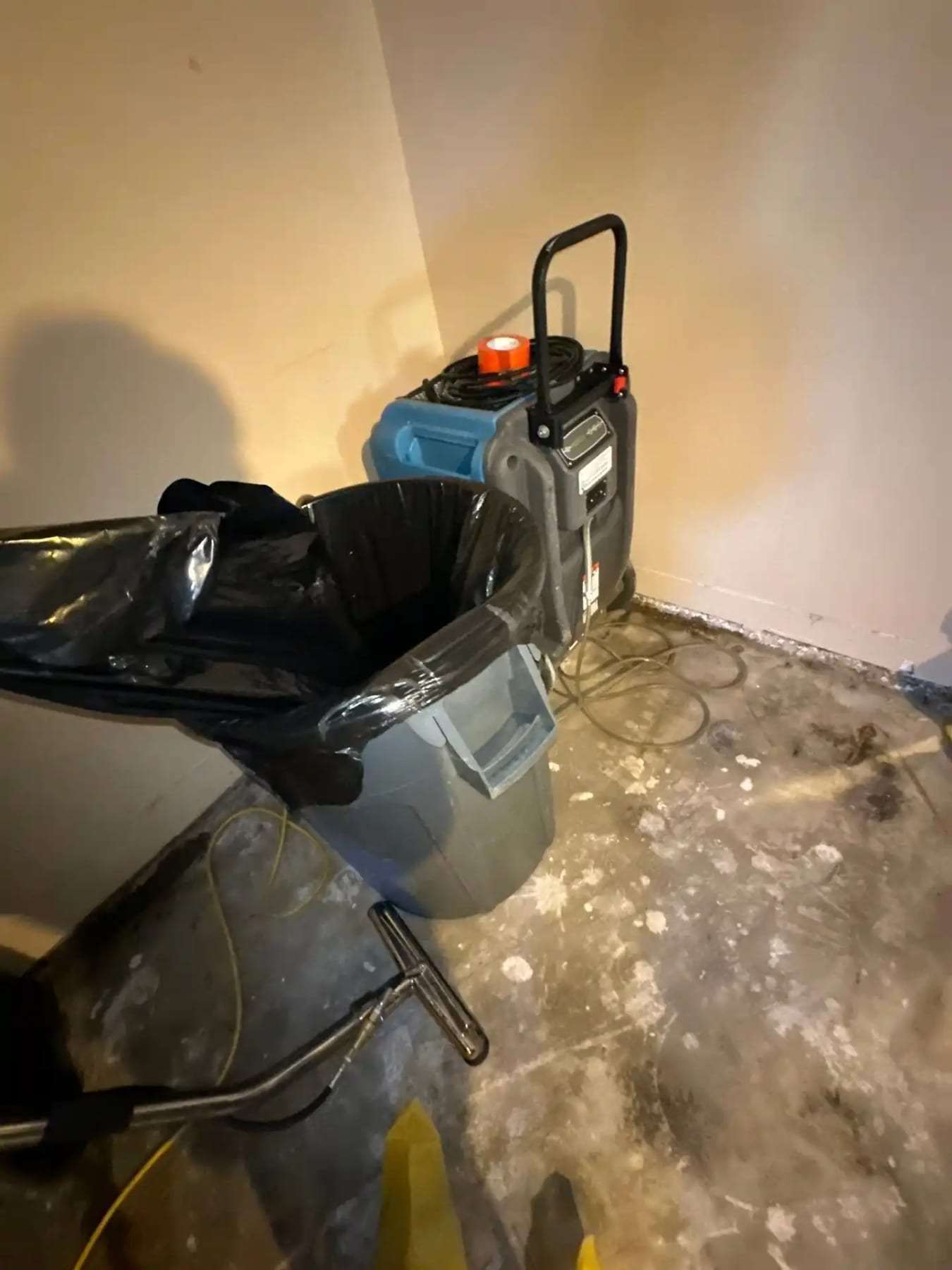
Air scrubber and a trash can on a wet basement floor. A general example of this kind of work, not a photo of a particular home, business or job.
Typical outcomes by material
| Item | Usual outcome | Notes |
|---|---|---|
| Clothing and washable linens | Often cleanable | Rinse, then hot wash with detergent; some people choose to discard anyway |
| Mattresses, pillows, upholstered furniture | Usually discarded | Contamination goes deep into padding |
| Stuffed toys and soft children's items | Usually discarded | Hard to sanitize and handled by children |
| Hard plastic, glass and metal items | Usually cleanable | Wash, disinfect, rinse and dry |
| Books and paper files | Usually discarded | Important documents may be copied or professionally restored |
| Printed photographs | Sometimes salvageable | Rinse gently in clean water and air dry face up; scan anything you keep |
| Electronics and appliances | Inspect before use | Do not plug in; a technician should check anything submerged |
| Cardboard storage boxes | Discarded | Repack contents into plastic bins after cleaning |
The emotional part
Basements in Thornton homes often hold the things no one wanted upstairs but no one wanted to throw away: holiday decorations, children's artwork, a parent's papers, sports gear. Sewage forces quick decisions about these items, and it is reasonable to feel overwhelmed. Separating irreplaceable items first, and giving yourself permission to let go of things that were already in storage for years, helps the rest of the sort move faster.
If a cleanup contractor handles contents, ask how items will be listed, whether you will see the discard list before items leave the property, and whether the firm offers contents cleaning or works with someone who does. Ask to keep anything that has sentimental value even if it is not worth cleaning, as long as it can be bagged safely.
General information for Thornton, not a quote or professional advice. In an emergency, call 911.