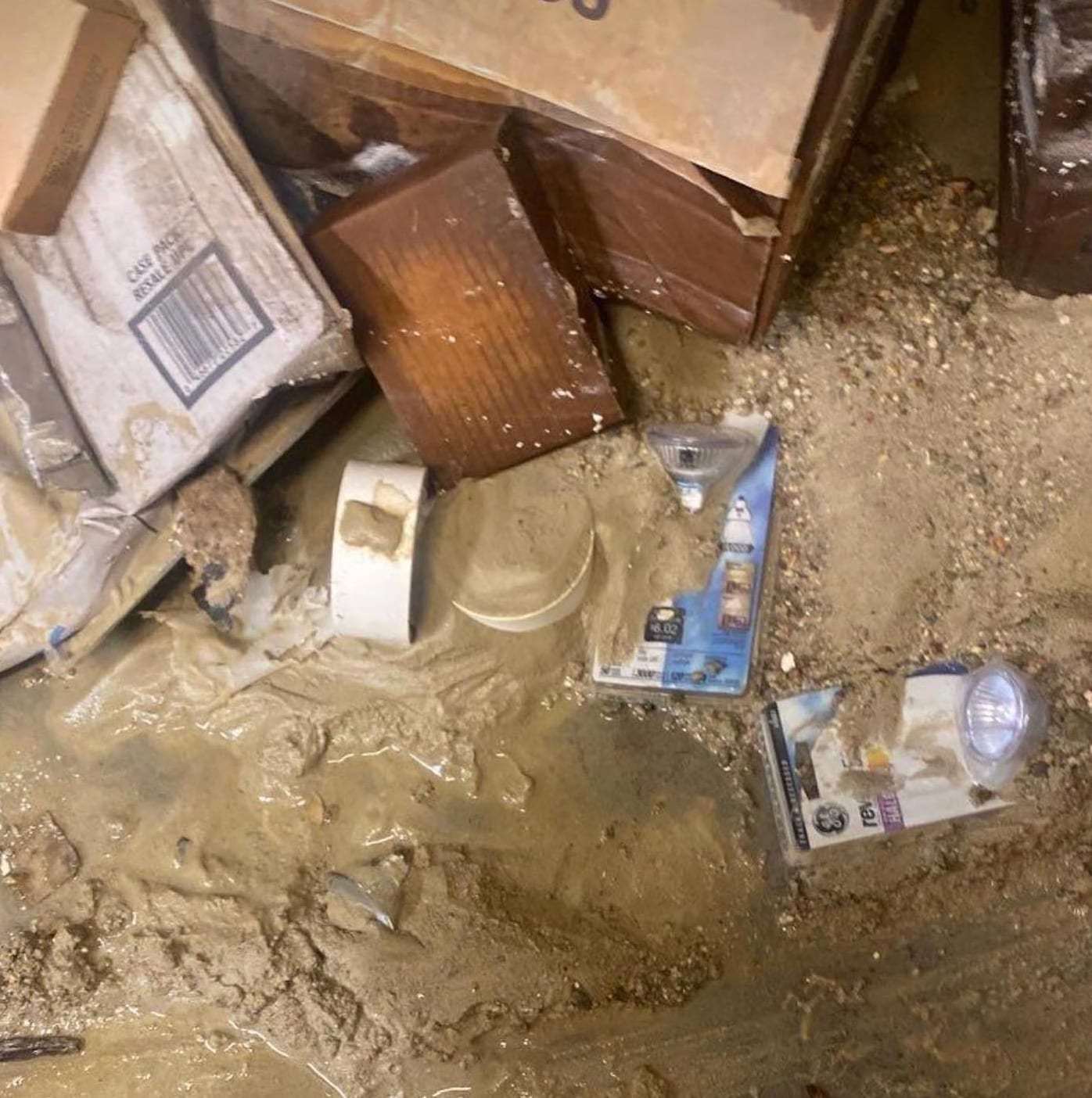
Flood-damaged basement with soaked boxes and debris. A general example of this kind of work, not a photo of a particular home, business or job.
How roots get in
Older sewer laterals were often built from short sections of clay or cast iron joined end to end. Over decades, those joints shift with soil movement and freeze-thaw cycles. A tiny gap leaks warm, nutrient-rich moisture into the surrounding soil, and nearby tree and shrub roots grow toward it. Once a hair-thin root enters the pipe, it branches into a mat that catches toilet paper, wipes and grease.
Thornton's first neighborhoods date to the 1950s, so many lots there have both mature trees and laterals that are well past their original design life. That is not a rule for every house, since some laterals have been replaced or lined, but it is the reason a sewer camera inspection is worth the cost on an older home with a history of slow drains.
The usual progression
Root problems tend to announce themselves well before a basement floods.
- Early
- Occasional slow drainage in the lowest fixtures, often after heavy water use such as laundry day.
- Months later
- Gurgling toilets, a floor drain that holds water briefly, and the need to plunge more often.
- Growing season
- Symptoms may worsen in warm months when trees are actively growing and drawing water.
- Tipping point
- A load of wipes, grease or a holiday crowd's water use plugs the root mat, and sewage comes up the floor drain.
- After clearing
- Cabling restores flow, but roots regrow from the same joint unless the pipe is repaired or lined.
Clearing versus repairing
Clearing the roots
- Cable machine or hydro-jetting cuts roots back
- Restores flow the same day in most cases
- Does not fix the joint that let roots in
- Often needs repeating on a schedule
Repairing the pipe
- Spot repair, full replacement, or a cured-in-place liner
- Seals the entry point so roots cannot return there
- Higher upfront cost and may need permits
- A camera inspection should guide which method fits
Before you decide on a repair
- Get the camera footage and a marked-up location of each root intrusion
- Ask how deep the line is and whether it runs under trees, driveway or sidewalk
- Ask whether lining is possible given offsets or sags
- Ask the city whether excavation in the right-of-way needs a permit
- Request a second opinion for any full-replacement recommendation
General information for Thornton, not a quote or professional advice. In an emergency, call 911.