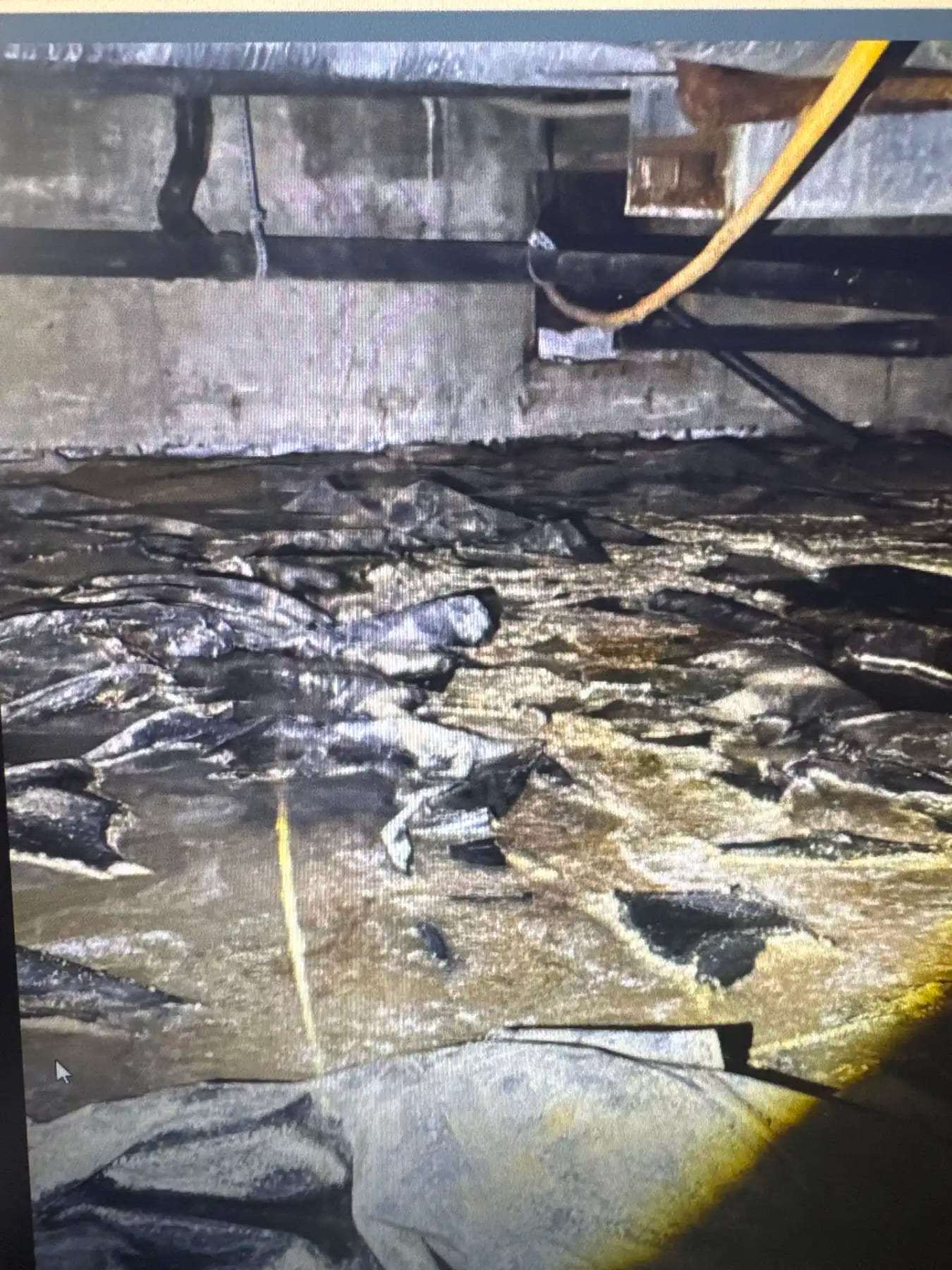
Crawlspace with torn plastic and debris over the dirt. Illustrative only: this photo is not from a job tied to this site or a specific address.
Why mechanicals need attention
Gas furnaces and water heaters have burners, igniters, controls and sometimes combustion air openings near the floor. Water that reaches those parts can corrode them or interfere with safe combustion, and sewage adds contamination that should not be heated or blown around. Many manufacturers say a gas control valve that has been underwater should be replaced rather than dried and reused; a technician can check what applies to your unit.
The furnace blower is the second concern. A forced-air system pulls return air from the house, often including the basement, and pushes it through every room. Running the blower while sewage is present, or while contaminated drywall is being removed, can carry odor and particles upstairs. Many cleanup plans keep the system off or seal return grilles in the affected area until containment is up.
What to do with each piece of equipment
- IfWater reached the furnace cabinet or burner areaThenLeave it off and have an HVAC technician inspect it before use. Mention that the water was sewage.
- IfWater stayed below the furnace but surrounded itThenKeep the blower off during cleanup, then have the unit and filter checked before restarting.
- IfThe water heater burner compartment got wetThenShut off gas to the appliance at its valve if it is safe to reach and get a technician to inspect.
- IfDuctwork or return boots near the floor were submergedThenAsk whether those sections should be cleaned or replaced; ducts in contact with sewage are usually not reused without evaluation.
- IfA washer or dryer stood in the waterThenUnplug from a dry location and have it checked; clean the exterior and do not run a load until it has been evaluated.
Before turning the system back on
- Affected area cleaned, sanitized and dried
- Furnace and water heater inspected after any water contact
- Furnace filter replaced
- Return grilles in the basement cleaned or ducts in the wet zone evaluated
- Carbon monoxide alarms tested on every level
- Floor drain and any combustion air openings clear of debris
General information for Thornton, not a quote or professional advice. In an emergency, call 911.